
It is natural for people to look at those in a leadership role and think that it is pretty easy to sit in the boss’s chair. After all, isn’t leadership about telling people what to do and then watching them while they do it?
Not quite.
An authentic leader is someone who can lead in all directions Leading down to those you have authority over. Leading laterally to those across the hierarchical structure. Leading up to those who supervise over you and leading yourself before leading others. This concept is called 360 degree leadership.
This type of leader recognizes that a leader should never lead from an authoritative position of making demands and punishing when demands are not followed. A 360 degree leader is someone who leads with vision and passion.
Components of the 360 Degree Leadership Model
If you can learn to be an effective 360° Leader, you will set yourself apart from your peers. The trajectory of your career and the eventual destination will be categorically different than the people around you. If you’re a catalyst in the movement, people will be working to catch up with you!
Leading Down
This is what comes to mind when most people think of “leading” – leading people who report to you and whom you have some sort of “authority” over. Although, that may be true, the use of power and authority – even when it is legitimately available – should not always be exercised. Effective 360° leadership when “leading down” isn’t about getting our way through force; it’s about helping those we lead see the same vision we see for the future of our department, division or organization.
Leading laterally
Your peers are not the easiest group of people to lead; nor is it easy for you to even know how to lead in this situation. Leading across the organization requires added skill because it’s not straightforward. Leading laterally is about using transformational skills, vision, unity of goals and purpose to cast a vision of equal partnership toward a desired end. The ability to work in a collaborative effort provides for successful lateral leadership.
Leading Up
While many people assume that leading up is not possible or necessary, it is important and is usually seen as the most difficult direction in the 360° model. Leading those who supervise you is critical to your success, whether that is personal, departmental, or organizational.
Leading Self
Most people will overlook the importance of self-leadership. They’ll forget that it’s impossible to give to others what you, yourself, do not possess in the first place. Self-leadership is about creating the necessary habits, procedures and processes in your own life that warrants your ability to offer leadership to others. If you cannot effectively lead yourself, most people will find it difficult to accept your offer to lead them.
Daniel Rundhaug is the executive director at Davenport University’s Institute for Professional Excellence. He excels in both leadership and management skill sets, being able to create and communicate visionary direction as well as implementing the necessary strategies to see the vision become a reality.
Share This Story!
It is natural for people to look at those in a leadership role and think that it is pretty easy to sit in the boss’s chair. After all, isn’t leadership about telling people what to do and then watching them while they do it?
Not quite.
An authentic leader is someone who can lead in all directions Leading down to those you have authority over. Leading laterally to those across the hierarchical structure. Leading up to those who supervise over you and leading yourself before leading others. This concept is called 360 degree leadership.
This type of leader recognizes that a leader should never lead from an authoritative position of making demands and punishing when demands are not followed. A 360 degree leader is someone who leads with vision and passion.
Components of the 360 Degree Leadership Model
If you can learn to be an effective 360° Leader, you will set yourself apart from your peers. The trajectory of your career and the eventual destination will be categorically different than the people around you. If you’re a catalyst in the movement, people will be working to catch up with you!
Leading Down
This is what comes to mind when most people think of “leading” – leading people who report to you and whom you have some sort of “authority” over. Although, that may be true, the use of power and authority – even when it is legitimately available – should not always be exercised. Effective 360° leadership when “leading down” isn’t about getting our way through force; it’s about helping those we lead see the same vision we see for the future of our department, division or organization.
Leading laterally
Your peers are not the easiest group of people to lead; nor is it easy for you to even know how to lead in this situation. Leading across the organization requires added skill because it’s not straightforward. Leading laterally is about using transformational skills, vision, unity of goals and purpose to cast a vision of equal partnership toward a desired end. The ability to work in a collaborative effort provides for successful lateral leadership.
Leading Up
While many people assume that leading up is not possible or necessary, it is important and is usually seen as the most difficult direction in the 360° model. Leading those who supervise you is critical to your success, whether that is personal, departmental, or organizational.
Leading Self
Most people will overlook the importance of self-leadership. They’ll forget that it’s impossible to give to others what you, yourself, do not possess in the first place. Self-leadership is about creating the necessary habits, procedures and processes in your own life that warrants your ability to offer leadership to others. If you cannot effectively lead yourself, most people will find it difficult to accept your offer to lead them.
Daniel Rundhaug is the executive director at Davenport University’s Institute for Professional Excellence. He excels in both leadership and management skill sets, being able to create and communicate visionary direction as well as implementing the necessary strategies to see the vision become a reality.
Share This Story!
Stay connected!
Get the latest Davenpost News delivered to your inbox!
Related Stories

As seen in the Spring DU Review magazine At Davenport University, we are always looking ahead, predicting what our students [...]

Davenport University offers free tax assistance to qualifying community members Every year, millions of dollars in tax refunds and credits [...]

People choose to attend Davenport University for a variety of reasons. Some seek a degree to continue a family tradition, [...]
Latest Stories

You never know where you’ll see a Davenport University student. A group from Davenport’s Master of Science in Occupational Therapy [...]
Davenport University is expanding opportunities for its nursing students through a partnership with Mary Free Bed Rehabilitation Hospital that offers [...]
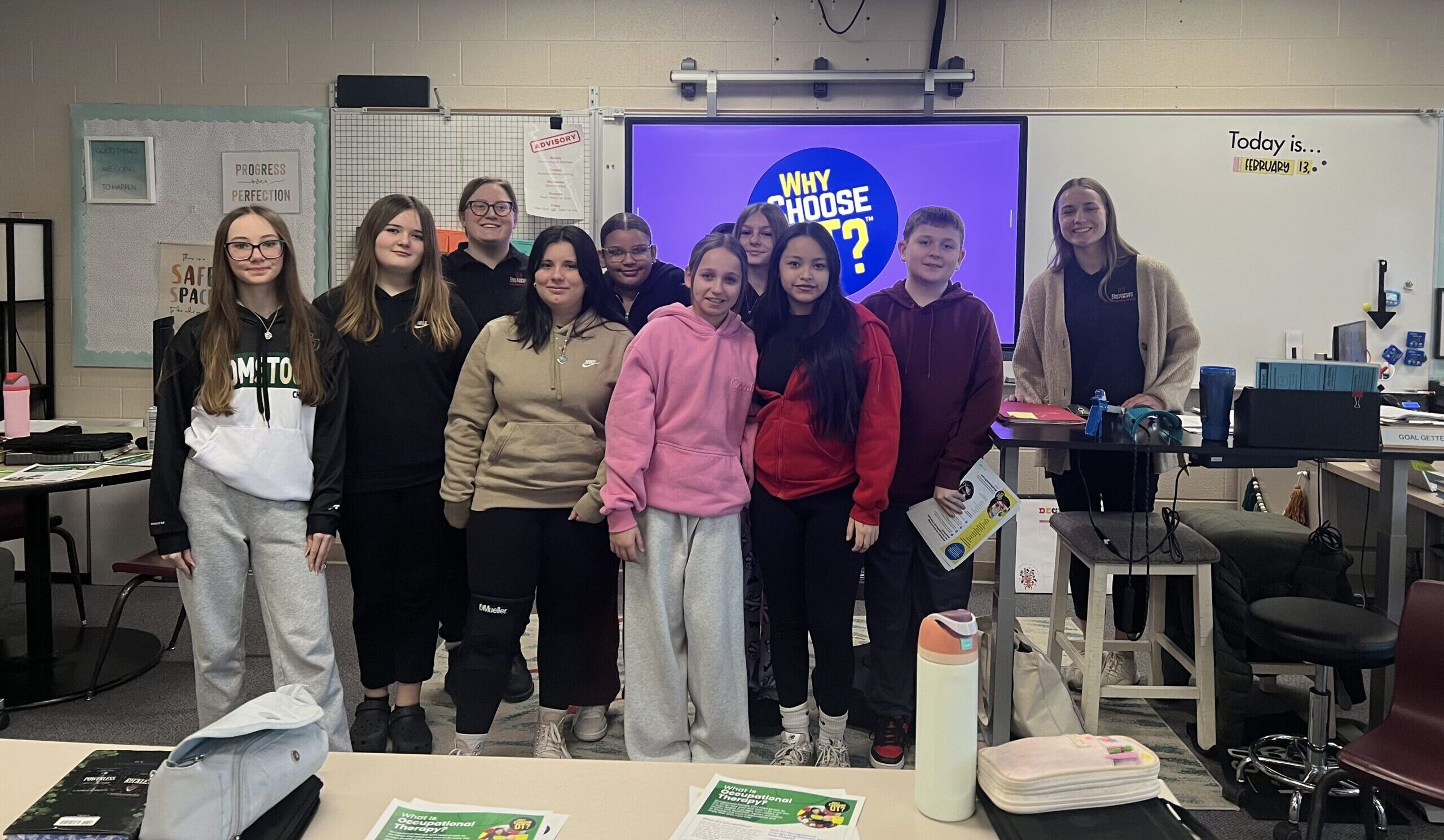
MSOT student, Ashlea Shantz talked about why she chose OT: “Occupational therapy is a good career choice for me because [...]