
As seen in the Spring DU Review digital magazine
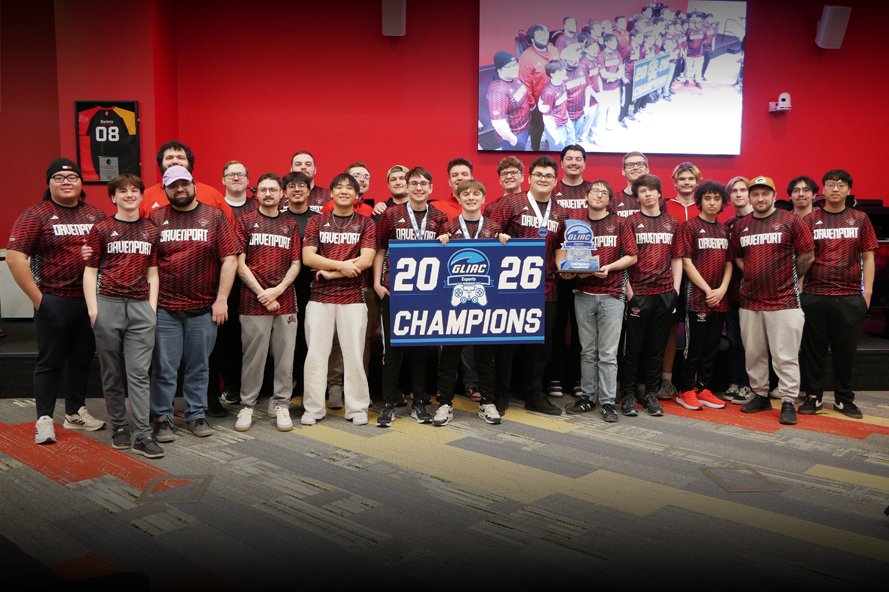
Davenport’s Esports team recently secured a third consecutive GLIAC championship.
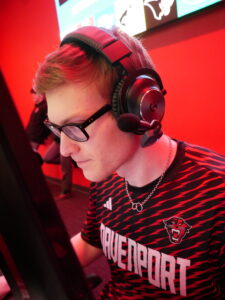 Imagine a fast-paced sport where you must outwit your opponent using finely-honed skills, mental toughness and lightning-fast strategic thinking. This description accurately describes most competitive sports, but now imagine accomplishing all of this and rarely meeting your opponent face-to-face. Welcome to the fascinating world of esports.
Surprisingly, esports has been around for more than 50 years, dating back to the first recorded video game competition in 1972. During the 1990s, competitive gaming grew quickly and about 10 years ago, it became a varsity sport at colleges and universities across the United States.
Davenport University officially began offering esports in 2019. The team currently consists of 52 student-athletes who came to Davenport from all over the country to play for the Panthers. Head coach Noah Antor said his players compete on eleven different rosters and nine game titles, most of which are team-oriented and require strong teamwork, communication, strategy and skill to be successful.
Instead of meeting one’s opponent on a court or field, esports competitors face off in digital arenas and participate in battles with many different categories, each with their own goals, strategies and rules. While most esports competitions are held online, events like the GLIAC championship, are held in person. “Our players look forward to the GLIAC championship every year, because it is in-person and the stakes are high,” said Antor.
With Antor at the helm, the Panthers’ esports team has continued to rise to the top of the rankings, recently earning its third consecutive GLIAC championship.
Antor said he credits his team’s esports success to three things: team culture, the drive of his student-athletes and the support of the university. “I know it’s been said before, but a positive culture is crucial for any team’s success,” he said.
The team is also excelling in the classroom, with a cumulative GPA of 3.22. Even more impressive is that 15 of Antor’s student-athletes have a GPA above 3.5, and five have a 4.0 GPA.
Antor knows there can be a negative connotation with spending too much time playing video games, so he emphasizes to his team the importance of spending their time wisely and being intentional during group and solo practices. “Our students compete at a high level and are driven to improve, so many of them spend extra time practicing and honing their skills,” Antor said. “It is just like a basketball player who takes extra free throws before or after practice. Our student athletes put in the time and effort required to be successful,” he said.
Lastly, he said the support his team receives from Davenport and the athletic department is a big contributor to his team’s success.
“I’m grateful to Davenport’s IT Department, because without their expertise, our team would not be able to compete,” he said. “And I would also like to give a big shoutout to my assistant coaches, William Garetto-Balmer, Shane Duncan, Michael Abood and Cristian Perez, because without their leadership, knowledge and willingness to teach our student-athletes, we would not be as successful as we are.”
He said he is also grateful to Paul Lowden, Davenport’s executive athletic director, and Ronda Varnesdeel, associate director of Athletics, whose leadership and support have been invaluable.
Antor said it’s not hard to be successful when his roster is full of talented and motivated student-athletes who buy into the team’s culture. “Our student-athletes have a great attitude and see that our system and culture work. That combination, paired with the drive to be the best they can be, naturally leads to success,” he said.
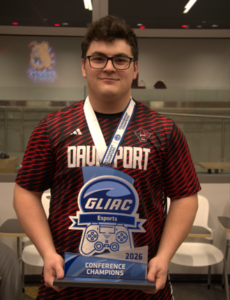 Business administration major Alex Bryant came to Davenport four years ago to play esports for the Panthers.
Bryant said that while he was aware of esports in general, he had no idea that he could play scholastic esports until he became involved in the sport as a sophomore in high school. “I played varsity my junior and senior year in high school and found out how organized and competitive it is, and now I’m in my fourth year of esports in college,” he said.
Bryant has been involved in each of Davenport’s GLIAC championship wins and said it’s an amazing feeling. “I was quite excited to win the third straight championship because it is likely going to be my last in-person tournament as a Panther. Being able to represent my team and my school and ending my college career with a win will definitely be something I’ll always remember,” he said.
To be successful at this level takes good communication skills and mental toughness, said Bryant, who is involved in the Rocket League. “Pure talent doesn’t always equal winning. In esports, communication can make the difference between winning and losing, and the ability to bounce back after a loss is what separates esports athletes from ordinary gamers.”
With that said, Bryant feels it’s not just what happens during practice or competitions that makes a team successful, but also what happens outside of the video game experience. “I believe that skill can only go so far and that team chemistry and a real bond are needed to be successful in esports,” said Bryant. “We achieve this by spending time talking to each other on video chats, meeting for dinner and getting together for extracurricular activities,” he said.
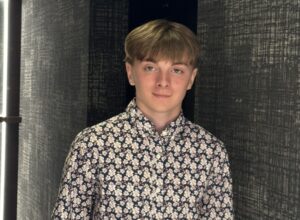 Teammate Ryan Kious, a sophomore network security and management major, wasn’t at Davenport for the first GLIAC championship, but he and the entire team are proud to have made it a three-peat.
“It was super exciting to win three in a row,” said Kious. “We didn’t really have anything to prove, but our players put in a lot of practice to get ready for the championship, so it was great that all of our hard work paid off.”
Kious, who plays high-level Valorant, tier 3 in competitions, said the team continues to add talented players, making them stronger every year.
“It takes a lot of determination and grit to compete at this level,” he said. “There are times when you have self-doubt and aren’t sure if you can continue, but it’s similar to other areas of life; you just have to continue to persevere.”
Click here to donate to Esports.
Share This Story!
As seen in the Spring DU Review digital magazine
Davenport’s Esports team recently secured a third consecutive GLIAC championship.
Imagine a fast-paced sport where you must outwit your opponent using finely-honed skills, mental toughness and lightning-fast strategic thinking. This description accurately describes most competitive sports, but now imagine accomplishing all of this and rarely meeting your opponent face-to-face. Welcome to the fascinating world of esports.
Surprisingly, esports has been around for more than 50 years, dating back to the first recorded video game competition in 1972. During the 1990s, competitive gaming grew quickly and about 10 years ago, it became a varsity sport at colleges and universities across the United States.
Davenport University officially began offering esports in 2019. The team currently consists of 52 student-athletes who came to Davenport from all over the country to play for the Panthers. Head coach Noah Antor said his players compete on eleven different rosters and nine game titles, most of which are team-oriented and require strong teamwork, communication, strategy and skill to be successful.
Instead of meeting one’s opponent on a court or field, esports competitors face off in digital arenas and participate in battles with many different categories, each with their own goals, strategies and rules. While most esports competitions are held online, events like the GLIAC championship, are held in person. “Our players look forward to the GLIAC championship every year, because it is in-person and the stakes are high,” said Antor.
With Antor at the helm, the Panthers’ esports team has continued to rise to the top of the rankings, recently earning its third consecutive GLIAC championship.
Antor said he credits his team’s esports success to three things: team culture, the drive of his student-athletes and the support of the university. “I know it’s been said before, but a positive culture is crucial for any team’s success,” he said.
The team is also excelling in the classroom, with a cumulative GPA of 3.22. Even more impressive is that 15 of Antor’s student-athletes have a GPA above 3.5, and five have a 4.0 GPA.
Antor knows there can be a negative connotation with spending too much time playing video games, so he emphasizes to his team the importance of spending their time wisely and being intentional during group and solo practices. “Our students compete at a high level and are driven to improve, so many of them spend extra time practicing and honing their skills,” Antor said. “It is just like a basketball player who takes extra free throws before or after practice. Our student athletes put in the time and effort required to be successful,” he said.
Lastly, he said the support his team receives from Davenport and the athletic department is a big contributor to his team’s success.
“I’m grateful to Davenport’s IT Department, because without their expertise, our team would not be able to compete,” he said. “And I would also like to give a big shoutout to my assistant coaches, William Garetto-Balmer, Shane Duncan, Michael Abood and Cristian Perez, because without their leadership, knowledge and willingness to teach our student-athletes, we would not be as successful as we are.”
He said he is also grateful to Paul Lowden, Davenport’s executive athletic director, and Ronda Varnesdeel, associate director of Athletics, whose leadership and support have been invaluable.
Antor said it’s not hard to be successful when his roster is full of talented and motivated student-athletes who buy into the team’s culture. “Our student-athletes have a great attitude and see that our system and culture work. That combination, paired with the drive to be the best they can be, naturally leads to success,” he said.
Business administration major Alex Bryant came to Davenport four years ago to play esports for the Panthers.
Bryant said that while he was aware of esports in general, he had no idea that he could play scholastic esports until he became involved in the sport as a sophomore in high school. “I played varsity my junior and senior year in high school and found out how organized and competitive it is, and now I’m in my fourth year of esports in college,” he said.
Bryant has been involved in each of Davenport’s GLIAC championship wins and said it’s an amazing feeling. “I was quite excited to win the third straight championship because it is likely going to be my last in-person tournament as a Panther. Being able to represent my team and my school and ending my college career with a win will definitely be something I’ll always remember,” he said.
To be successful at this level takes good communication skills and mental toughness, said Bryant, who is involved in the Rocket League. “Pure talent doesn’t always equal winning. In esports, communication can make the difference between winning and losing, and the ability to bounce back after a loss is what separates esports athletes from ordinary gamers.”
With that said, Bryant feels it’s not just what happens during practice or competitions that makes a team successful, but also what happens outside of the video game experience. “I believe that skill can only go so far and that team chemistry and a real bond are needed to be successful in esports,” said Bryant. “We achieve this by spending time talking to each other on video chats, meeting for dinner and getting together for extracurricular activities,” he said.
Teammate Ryan Kious, a sophomore network security and management major, wasn’t at Davenport for the first GLIAC championship, but he and the entire team are proud to have made it a three-peat.
“It was super exciting to win three in a row,” said Kious. “We didn’t really have anything to prove, but our players put in a lot of practice to get ready for the championship, so it was great that all of our hard work paid off.”
Kious, who plays high-level Valorant, tier 3 in competitions, said the team continues to add talented players, making them stronger every year.
“It takes a lot of determination and grit to compete at this level,” he said. “There are times when you have self-doubt and aren’t sure if you can continue, but it’s similar to other areas of life; you just have to continue to persevere.”
Click here to donate to Esports.
Share This Story!
Stay connected!
Get the latest Davenpost News delivered to your inbox!
Related Stories
DANIEL DEVOS TO RECEIVE 2017 PETER C. COOK EXCELLENCE IN BUSINESS AWARD Football Legend Joe Montana to speak at gala, [...]
Life has been anything but easy for Tai-Tyana Miller. The 27-year-old lifelong resident of Detroit and mother of three is [...]
The Davenport University community mourns the passing of Chancellor Emeritus Donald W. Maine, who died at the age of 75 on [...]
Latest Stories
You never know where you’ll see a Davenport University student. A group from Davenport’s Master of Science in Occupational Therapy [...]
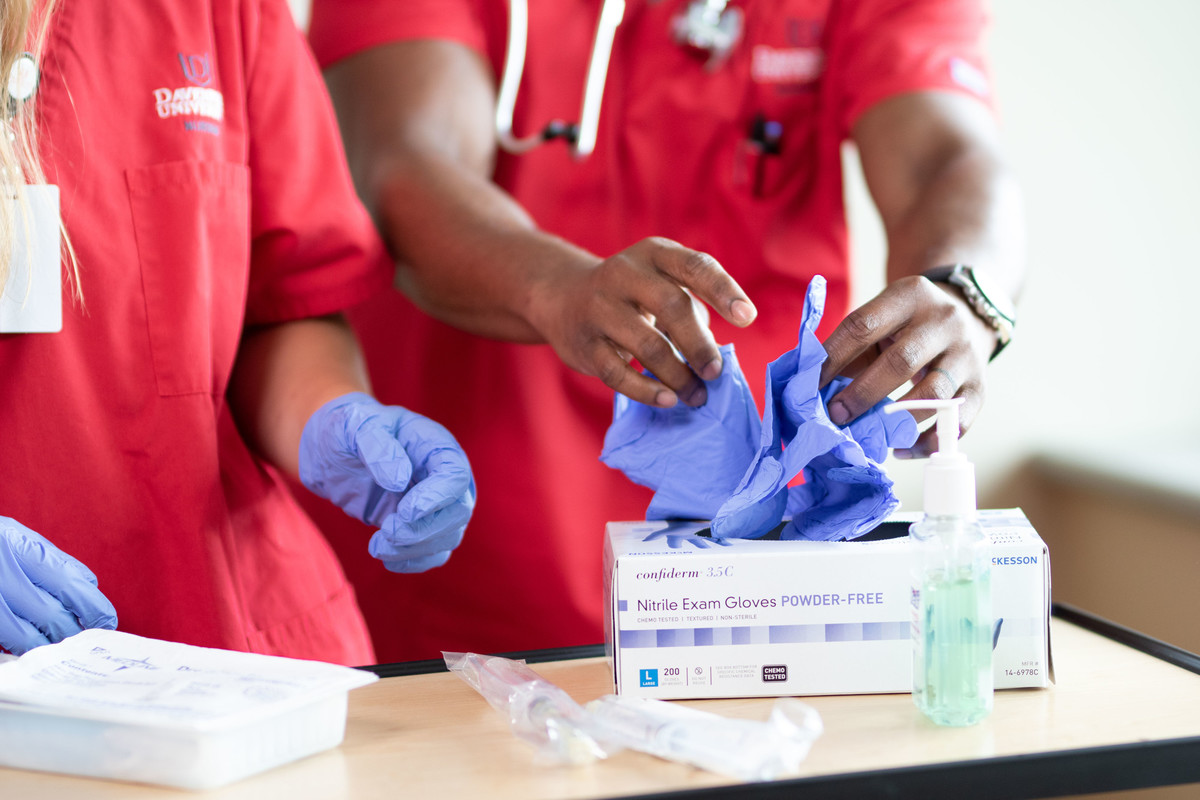
Davenport University is expanding opportunities for its nursing students through a partnership with Mary Free Bed Rehabilitation Hospital that offers [...]
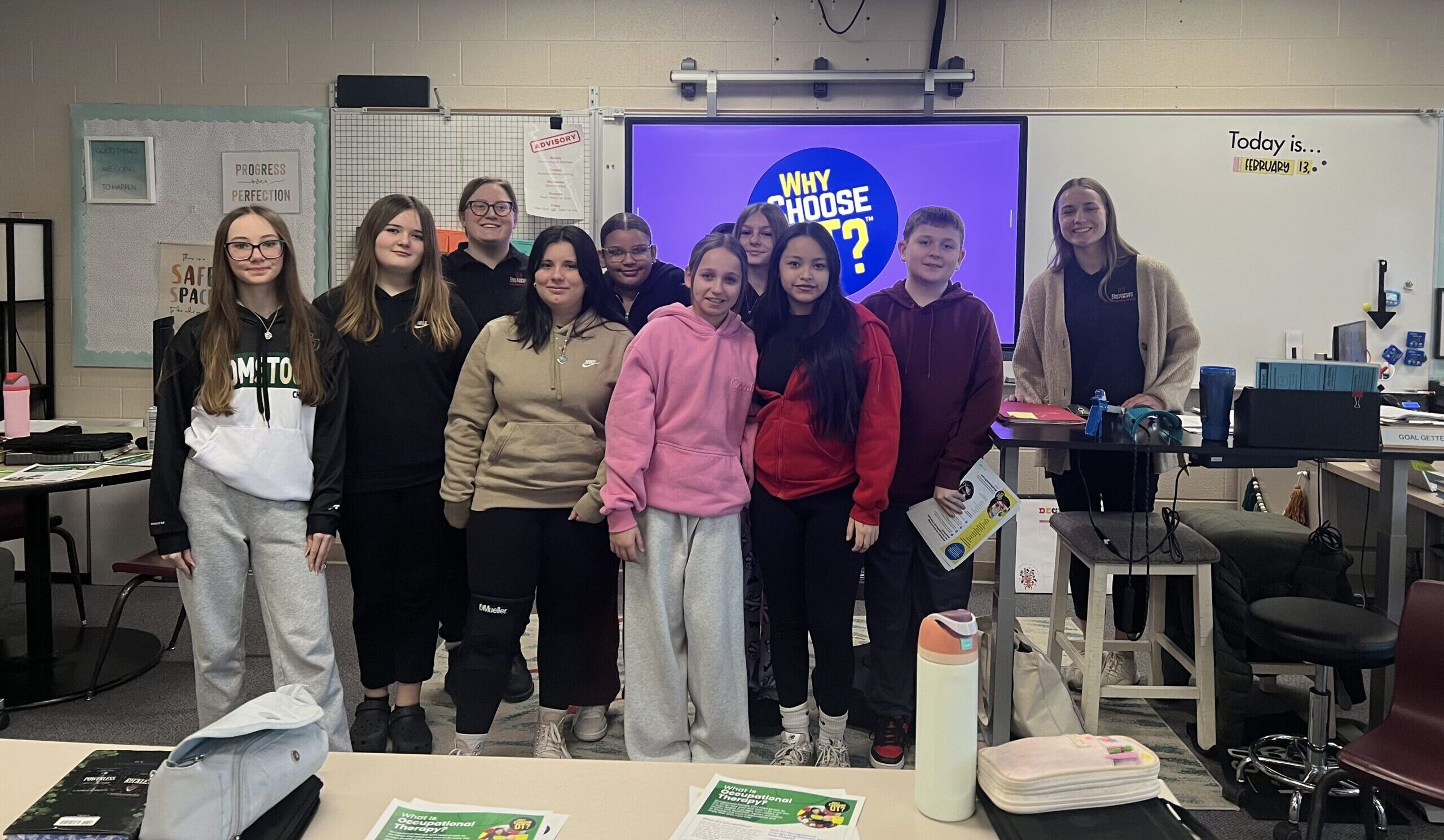
MSOT student, Ashlea Shantz talked about why she chose OT: “Occupational therapy is a good career choice for me because [...]