
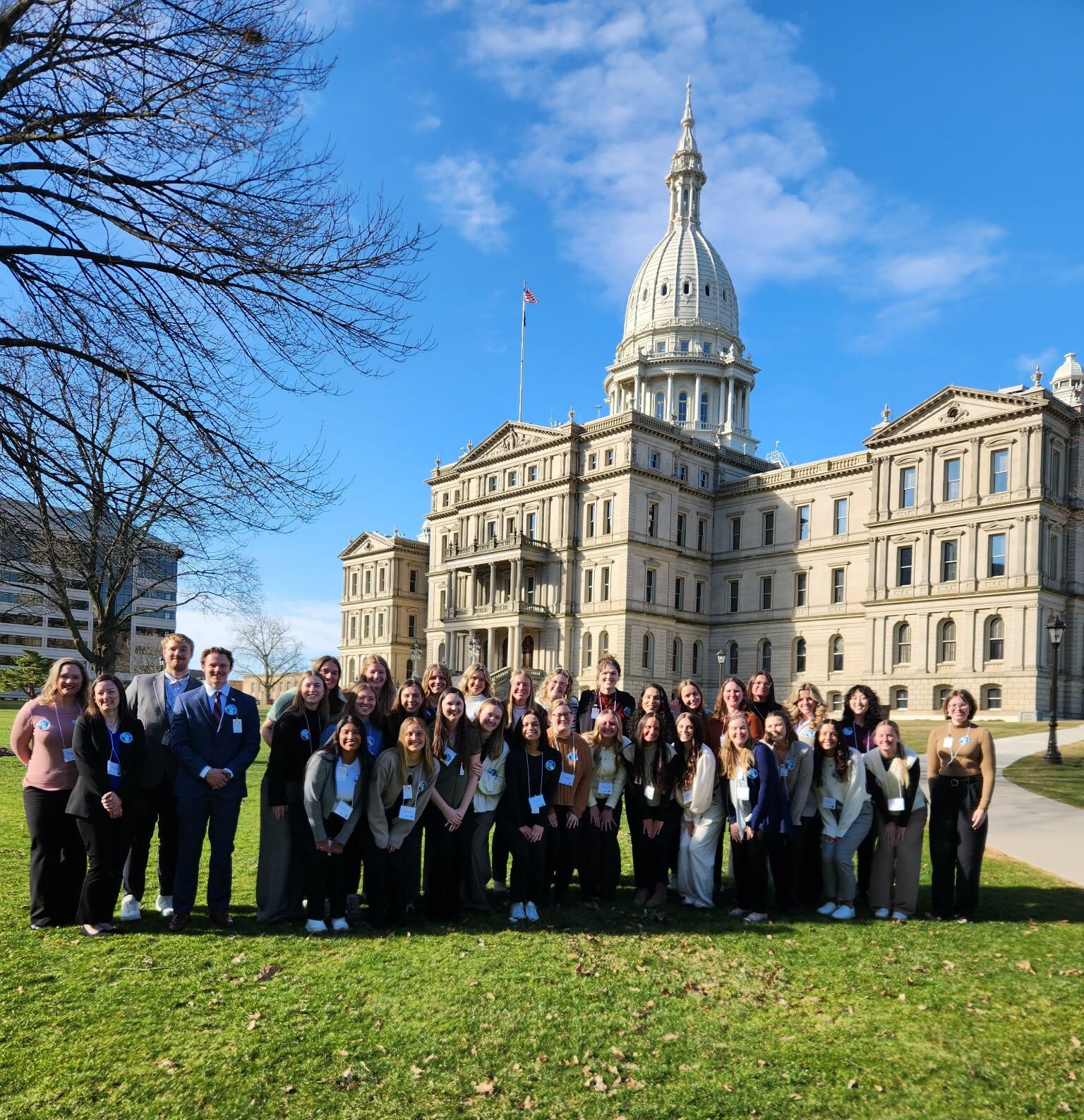

Future occupational therapists from Davenport University visited the State Capitol earlier this month to advocate for expanded access to care for Michigan residents.
On Thursday, March 12, first- and second-year students from Davenport’s Master of Science in Occupational Therapy (MSOT) program traveled to the Michigan House of Representatives building in Lansing to participate in Lansing Lobby Day. The event brought students and professionals together to meet with lawmakers and highlight the critical role occupational therapy plays in helping people live independent and meaningful lives.
“Advocacy is an important part of occupational therapy practice,” said Jennifer Bingman, Davenport University Occupational Therapy interim department chair. “This includes ensuring that the individuals who need therapy have access to appropriate services. Lobby Day helps our students develop the skills needed to communicate the value of occupational therapy and collaborate with policymakers to support policies that improve access to care in Michigan.”
For many students, Lobby Day, a program in partnership with the Michigan Occupational Therapy Association, was their first opportunity to engage directly with lawmakers and learn how advocacy can improve access to care.
“Lobby Day showed me how important it is to advocate for occupational therapy, especially since many policymakers don’t fully understand what we do,” said Mark Palmeter, a first-year MSOT student. “Being able to share real stories and explain how OT helps people regain independence and participate in meaningful daily activities made me realize how much impact even one conversation can have.”
During their visit, students called on the state of Michigan to join the Occupational Therapy Licensure Compact (OT Compact) and for legislators to work to increase access to occupational therapy through telehealth.
The compact is an agreement among participating states that allows licensed occupational therapists and occupational therapy assistants to practice across state lines through a streamlined licensing process. Supporters say joining the compact could help Michigan address workforce shortages and improve patient access to services, especially in rural or underserved areas.
Currently, more than 30 states have enacted legislation to participate in the compact, enabling licensed practitioners in good standing to obtain “compact privileges” to practice in other member states.
Students also discussed the importance of expanded telehealth options for occupational therapy. Telehealth services can remove geographic and transportation barriers, making therapy more accessible for patients who may otherwise struggle to receive care.
“We want our students to see how public policy influences access to health care services,” said Bingman. “Programs like Lobby Day help them develop the confidence to advocate for their clients and communicate the value of occupational therapy.”
The association also promotes “Everyday Advocacy,” encouraging members to visit the capitol, email representatives and attend coffee hours regularly to share their occupational therapy concerns.
A master’s degree in occupational therapy focuses on practical, evidence-based ways to support people who need to make changes so they can more fully participate in their lives. For example, an occupational therapist might help those with physical or cognitive challenges adapt to their surroundings to support meaningful engagement in school, work, social activities, sports and hobbies.
For more information on Davenport University’s Master of Science in Occupational Therapy program, visit: davenport.edu/academics/areas/health-professions/master-science-occupational-therapy




Share This Story!
Future occupational therapists from Davenport University visited the State Capitol earlier this month to advocate for expanded access to care for Michigan residents.
On Thursday, March 12, first- and second-year students from Davenport’s Master of Science in Occupational Therapy (MSOT) program traveled to the Michigan House of Representatives building in Lansing to participate in Lansing Lobby Day. The event brought students and professionals together to meet with lawmakers and highlight the critical role occupational therapy plays in helping people live independent and meaningful lives.
“Advocacy is an important part of occupational therapy practice,” said Jennifer Bingman, Davenport University Occupational Therapy interim department chair. “This includes ensuring that the individuals who need therapy have access to appropriate services. Lobby Day helps our students develop the skills needed to communicate the value of occupational therapy and collaborate with policymakers to support policies that improve access to care in Michigan.”
For many students, Lobby Day, a program in partnership with the Michigan Occupational Therapy Association, was their first opportunity to engage directly with lawmakers and learn how advocacy can improve access to care.
“Lobby Day showed me how important it is to advocate for occupational therapy, especially since many policymakers don’t fully understand what we do,” said Mark Palmeter, a first-year MSOT student. “Being able to share real stories and explain how OT helps people regain independence and participate in meaningful daily activities made me realize how much impact even one conversation can have.”
During their visit, students called on the state of Michigan to join the Occupational Therapy Licensure Compact (OT Compact) and for legislators to work to increase access to occupational therapy through telehealth.
The compact is an agreement among participating states that allows licensed occupational therapists and occupational therapy assistants to practice across state lines through a streamlined licensing process. Supporters say joining the compact could help Michigan address workforce shortages and improve patient access to services, especially in rural or underserved areas.
Currently, more than 30 states have enacted legislation to participate in the compact, enabling licensed practitioners in good standing to obtain “compact privileges” to practice in other member states.
Students also discussed the importance of expanded telehealth options for occupational therapy. Telehealth services can remove geographic and transportation barriers, making therapy more accessible for patients who may otherwise struggle to receive care.
“We want our students to see how public policy influences access to health care services,” said Bingman. “Programs like Lobby Day help them develop the confidence to advocate for their clients and communicate the value of occupational therapy.”
The association also promotes “Everyday Advocacy,” encouraging members to visit the capitol, email representatives and attend coffee hours regularly to share their occupational therapy concerns.
A master’s degree in occupational therapy focuses on practical, evidence-based ways to support people who need to make changes so they can more fully participate in their lives. For example, an occupational therapist might help those with physical or cognitive challenges adapt to their surroundings to support meaningful engagement in school, work, social activities, sports and hobbies.
For more information on Davenport University’s Master of Science in Occupational Therapy program, visit: davenport.edu/academics/areas/health-professions/master-science-occupational-therapy
Share This Story!
Stay connected!
Get the latest Davenpost News delivered to your inbox!
Related Stories
Life has been anything but easy for Tai-Tyana Miller. The 27-year-old lifelong resident of Detroit and mother of three is [...]

Davenport University’s Master of Science in Nursing was granted a 10-year term of accreditation by the Commission on Collegiate Nursing [...]

As the holiday season unfolds, Davenport campuses across Michigan are embracing the spirit of giving through a variety of community-focused [...]
Latest Stories

You never know where you’ll see a Davenport University student. A group from Davenport’s Master of Science in Occupational Therapy [...]
Davenport University is expanding opportunities for its nursing students through a partnership with Mary Free Bed Rehabilitation Hospital that offers [...]

MSOT student, Ashlea Shantz talked about why she chose OT: “Occupational therapy is a good career choice for me because [...]