
As seen in Crain’s Grand Rapids Business
 Across every sector, leaders face the same challenge: How to move beyond AI hype and software rollouts toward real, scalable transformation, while staffing our companies and institutions with employees who combine AI skills with sound judgment.
At Davenport University, we have found success with both employees and students by following a replicable model. Empowering people closest to the daily work to identify needs and opportunities, experiment within clear guardrails and turn individual learning into shared progress.
Since becoming president of Davenport University, I have made it a priority to listen to leaders across West Michigan about what they need from today’s workforce. One message has come through consistently — as AI becomes more capable, employers need people who bring the distinctly human skills that technology cannot replace.
At Davenport, we call them power skills: Critical thinking, collaboration, communication, adaptability, ethical reasoning and sound judgment. These aren’t secondary to technical skills. In an AI-driven workplace, they are primary. And theyare also the foundation of strong teams. Technology can make us faster and more efficient, but it is these power skills that build trust, strengthen relationships, help us work through differences and allow teams to perform at their best.
Davenport’s strategic plan, Vision 2030, calls for us to be a model for other higher education institutions in applying AI, and that work is underway across our programs. We launched a structured microgrant initiative that invited faculty to redesign an assignment, course or program. That initial effort has already affected 60 courses and thousands of our students. And we’re just getting started.
Davenport’s curriculum is rapidly shifting toward active learning experiences that require students to demonstrate and defend their thinking. Students must explain what they accept from AI, what they reject and why. They need strong foundational knowledge to recognize inaccurate or fabricated outputs, and they must learn to useAI within ethical guardrails that protect confidentiality, data privacy and organizational integrity. They must learn all of this so they are ready to excel in the workforce of today and tomorrow.
The rise of AI makes education more important, not less
Generative AI has created a clear distinction between raw output and true understanding. AI can draft a strategic plan or code in seconds, but rapid output is not the same as insightful thinking. Education develops the foundational knowledge, critical thinking and judgment that allow people to use AI well. The more capable technology becomes, the more important the critical thinking of our workforce becomes.
Business leaders should ask hard questions: Can employees identify opportunities using AI and solve real problems? Can they evaluate AI-generated work rather than simply accept it? Do they know when human expertise should override an algorithm?
AI will continue to become faster, more accessible and more sophisticated. Access to technology will not be the differentiator. How people apply judgment will.
For universities and businesses, that is the opportunity we must seize. We must buildenvironments where people learn to experiment responsibly, challenge what AIproduces and apply their own expertise to make it better.
The more AI can do for us, the more important it becomes to educate people to think for themselves.
Share This Story!
As seen in Crain’s Grand Rapids Business
Across every sector, leaders face the same challenge: How to move beyond AI hype and software rollouts toward real, scalable transformation, while staffing our companies and institutions with employees who combine AI skills with sound judgment.
At Davenport University, we have found success with both employees and students by following a replicable model. Empowering people closest to the daily work to identify needs and opportunities, experiment within clear guardrails and turn individual learning into shared progress.
Since becoming president of Davenport University, I have made it a priority to listen to leaders across West Michigan about what they need from today’s workforce. One message has come through consistently — as AI becomes more capable, employers need people who bring the distinctly human skills that technology cannot replace.
At Davenport, we call them power skills: Critical thinking, collaboration, communication, adaptability, ethical reasoning and sound judgment. These aren’t secondary to technical skills. In an AI-driven workplace, they are primary. And theyare also the foundation of strong teams. Technology can make us faster and more efficient, but it is these power skills that build trust, strengthen relationships, help us work through differences and allow teams to perform at their best.
Davenport’s strategic plan, Vision 2030, calls for us to be a model for other higher education institutions in applying AI, and that work is underway across our programs. We launched a structured microgrant initiative that invited faculty to redesign an assignment, course or program. That initial effort has already affected 60 courses and thousands of our students. And we’re just getting started.
Davenport’s curriculum is rapidly shifting toward active learning experiences that require students to demonstrate and defend their thinking. Students must explain what they accept from AI, what they reject and why. They need strong foundational knowledge to recognize inaccurate or fabricated outputs, and they must learn to useAI within ethical guardrails that protect confidentiality, data privacy and organizational integrity. They must learn all of this so they are ready to excel in the workforce of today and tomorrow.
The rise of AI makes education more important, not less
Generative AI has created a clear distinction between raw output and true understanding. AI can draft a strategic plan or code in seconds, but rapid output is not the same as insightful thinking. Education develops the foundational knowledge, critical thinking and judgment that allow people to use AI well. The more capable technology becomes, the more important the critical thinking of our workforce becomes.
Business leaders should ask hard questions: Can employees identify opportunities using AI and solve real problems? Can they evaluate AI-generated work rather than simply accept it? Do they know when human expertise should override an algorithm?
AI will continue to become faster, more accessible and more sophisticated. Access to technology will not be the differentiator. How people apply judgment will.
For universities and businesses, that is the opportunity we must seize. We must buildenvironments where people learn to experiment responsibly, challenge what AIproduces and apply their own expertise to make it better.
The more AI can do for us, the more important it becomes to educate people to think for themselves.
Share This Story!
Stay connected!
Get the latest Davenpost News delivered to your inbox!
Related Stories

Crain’s Grand Rapids Business named Richard J. Pappas, Davenport University president, as one of its Notable Leaders in Education for [...]
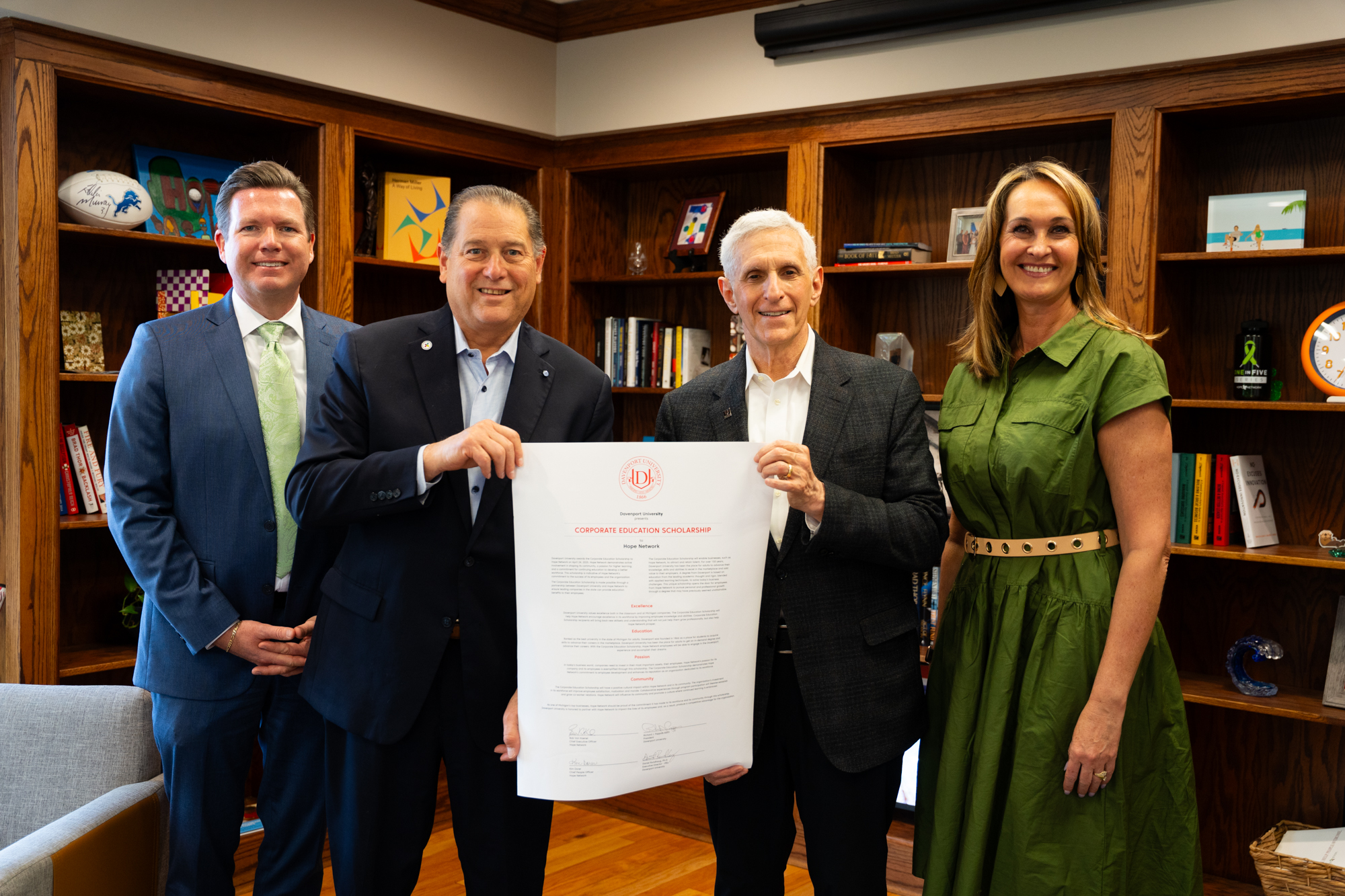
Leaders from Davenport University and Hope Network signed an agreement representing the organizations joint commitment to education and human potential. [...]

For Grant Wolfram, BBA ‘22, success on the pitcher’s mound is rooted in a work ethic that was developed [...]
Latest Stories

As seen in Crain's Grand Rapids Business Across every sector, leaders face the same challenge: How to move beyond AI [...]

Click here to see Welcome Week in action. Welcome Week at Davenport University’s W.A. Lettinga Grand Rapids Campus means [...]
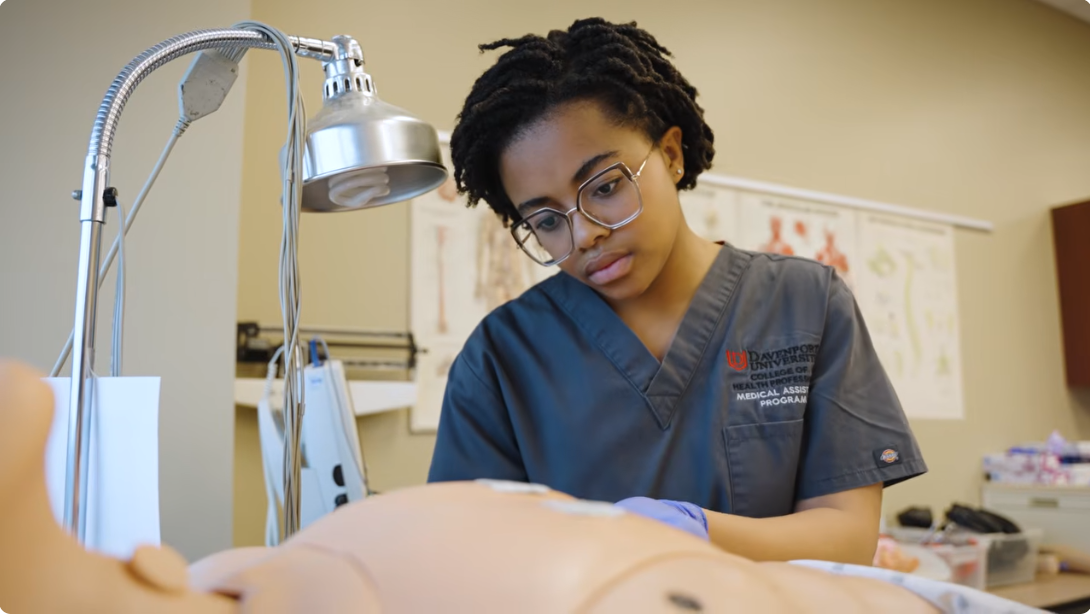
Davenport University partnered with Kent ISD students to create this video highlighting the partnership. Davenport University is addressing the healthcare [...]